The Postman
Ranger
"Embrace the Patina..."I love patina a lot more this week than I did the last seven years!

"Embrace the Patina..."I love patina a lot more this week than I did the last seven years!

I don't want to put a damper on this patina party"Embrace the Patina..."
 , because embracing patina is fine, since it is reversible if desired by you or a subsequent owner....unfortunately corrosion, and its accompanying pitting damage is permanent, so should be prevented if possible, lest you devalue your TD considerably.

That fifth inning!!Game three of the World Series goes to the Brew Crew. They lead 3-0
Will the Great Tournac's prediction come true???I’m taking the Brewers in four.
Ya watch that border between aluminum and stainless along the fender especially..."galvanic corrosion" - keep it dry and coated.I don't want to put a damper on this patina party

All the leaves are brown
and the sky is gray.
I've been out for a flight,
on an autumn day.
Really gets me yearning
For some warm sunny days.
Arizona dreaming
On such an autumn day.
My spouse is out of town this weekend so after years of putting it off, I worked up the gumption to start trying to Walbernize the 560.
I don't know, but I wonder if CI may use a thin gasket or coating of some sort on the fender or aluminum sidewall to prevent physical contact, since I've never seen one of their TD's with a galvanic corrosion issue at that junction.Ya watch that border between aluminum and stainless along the fender especially..."galvanic corrosion" - keep it dry and coated.
Anyone using marine wax?

I don't know, but I wonder if CI may use a thin gasket or coating of some sort on the fender or aluminum sidewall to prevent physical contact, since I've never seen one of their TD's with a galvanic corrosion issue at that junction.
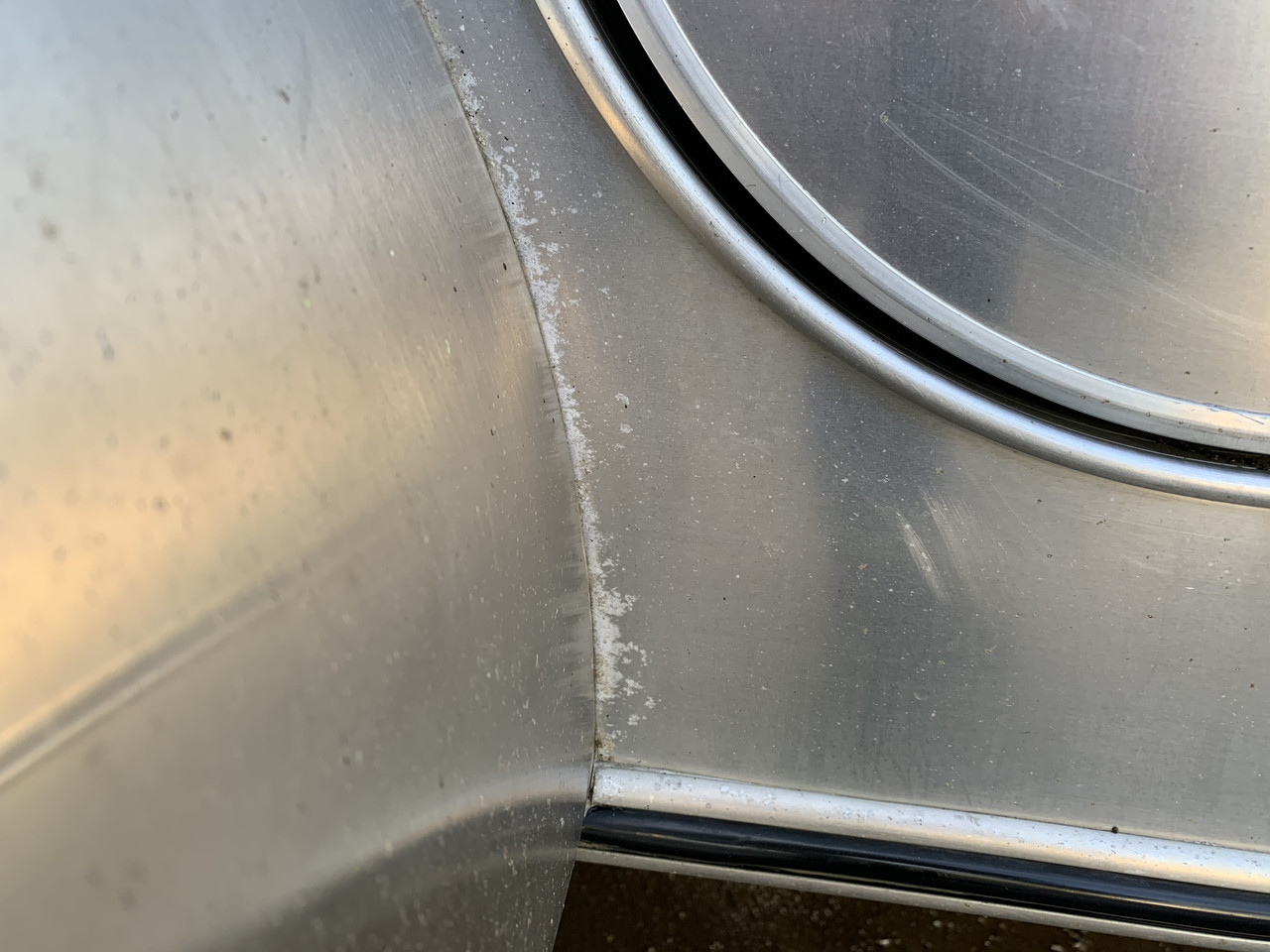
Not ever having made the trip to AK, I was unaware of the chloride treatment routinely used on the the roads there. Thanks for educating me on those conditions.My CI has galvanic corrosion at the junction between the steel fender and the aluminum skin. That’s not what I’m trying to clean up with this project.
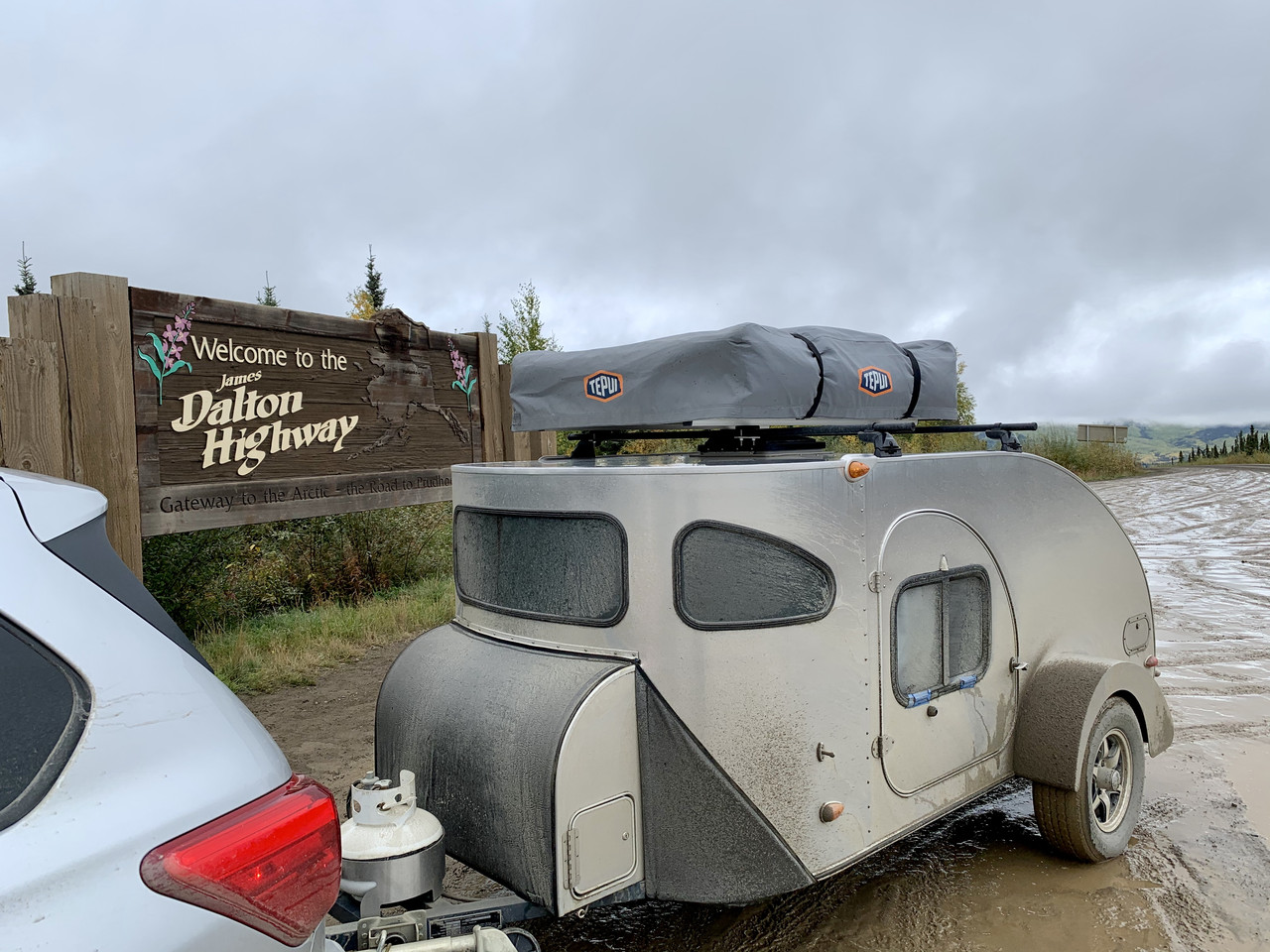
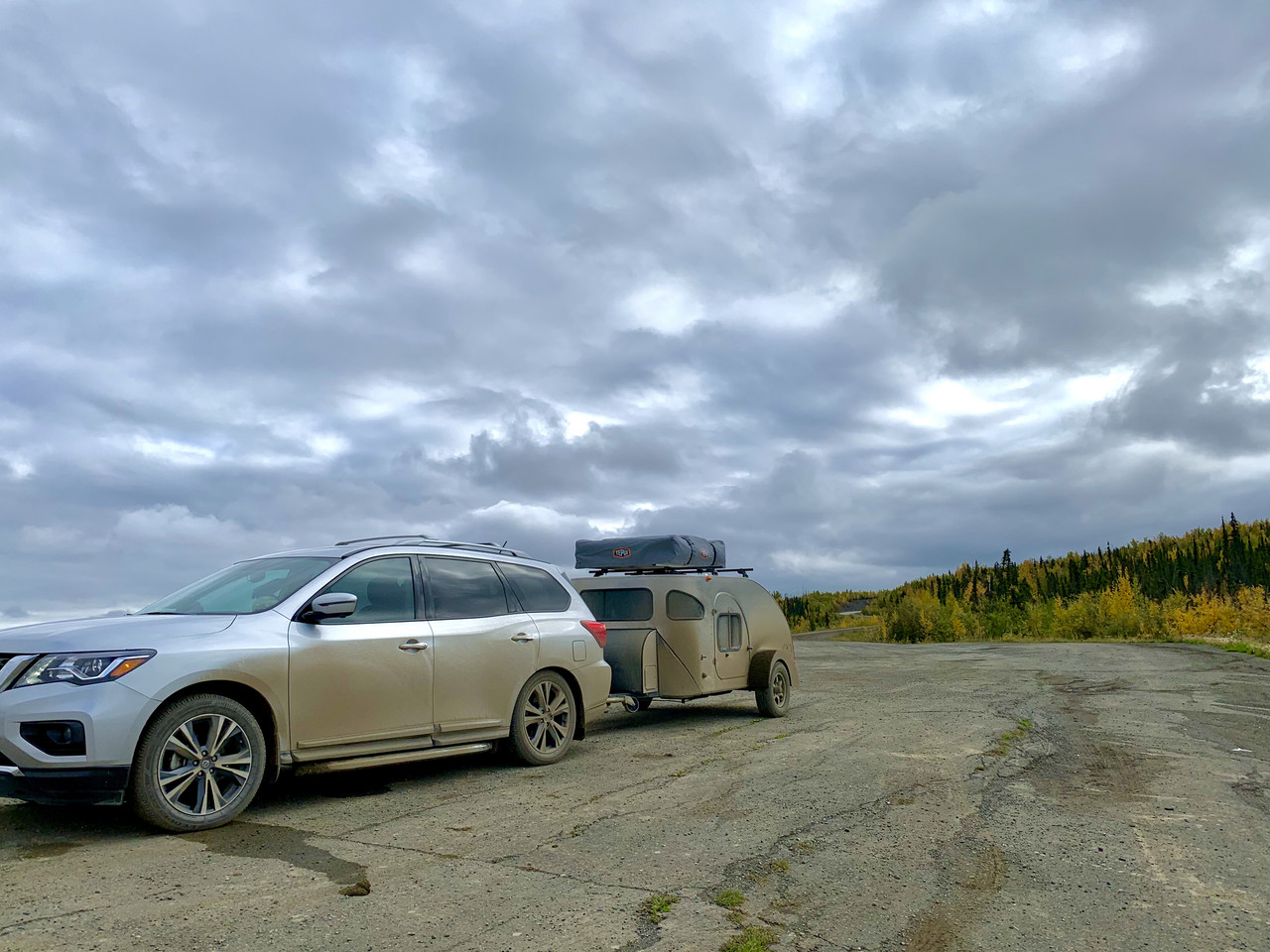
When we lived in Alaska and took the camper partway up the Dalton Highway, we didn’t know we’d be creating a corrosion risk. The Dalton is primarily a gravel road is and is perpetually being re-graded and re-surfaced. They use a gravel compound that includes a salt-derivative of some type. The salty-agent mixed with the gravel is laid down with a lot of water and graded smooth. The sun bakes it and it forms a nearly-concrete hardness, until weather comes and interacts with it to soften it and degrade it. Because of the undulating nature of permafrost, this is actually much more cost effective than laying down asphalt just to have it fall apart in 9 months because the ground won’t stay still.
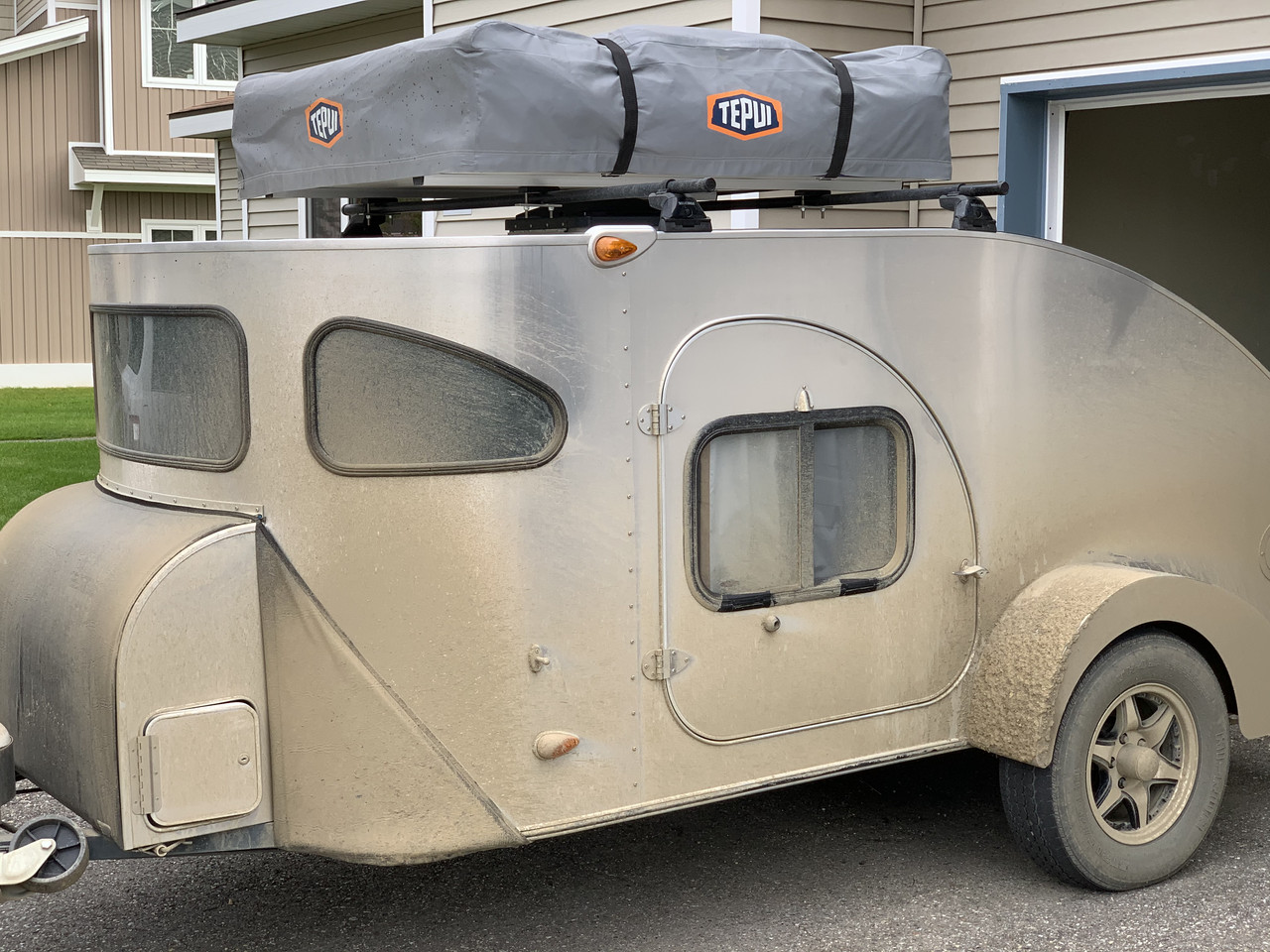
As we drove along the Dalton, we encountered a few gravel breaks of 2-5 mile stretches that were being re-graveled, which meant the gravel being laid down was still wet and soft. It piled up on our fenders in a comically thick layer, and then as soon as it was on our fenders and away from water it began to harden. We didn’t think much of it (everything is dirty on the Dalton), so we didn’t work hard to clean it off the fenders when we set up camp. But, even if we had wanted to, we wouldn’t have had the water supply necessary to clean it off at the camp site.
Fast forward to the after-camping cleanup process: I’m power washing half a highway off of my fenders at home and noticing a white hard substance right up at the junction of the fenders and the aluminum sides. A quick email/call to Cary and that’s how I learned everything I know about galvanic corrosion.

I’ve driven the Dalton before and am envious you were able pull a CI. Did you make it all the way?My CI has galvanic corrosion at the junction between the steel fender and the aluminum skin. That’s not what I’m trying to clean up with this project.
When we lived in Alaska and took the camper partway up the Dalton Highway, we didn’t know we’d be creating a corrosion risk. The Dalton is primarily a gravel road is and is perpetually being re-graded and re-surfaced. They use a gravel compound that includes a salt-derivative of some type. The salty-agent mixed with the gravel is laid down with a lot of water and graded smooth. The sun bakes it and it forms a nearly-concrete hardness, until weather comes and interacts with it to soften it and degrade it. Because of the undulating nature of permafrost, this is actually much more cost effective than laying down asphalt just to have it fall apart in 9 months because the ground won’t stay still.
As we drove along the Dalton, we encountered a few gravel breaks of 2-5 mile stretches that were being re-graveled, which meant the gravel being laid down was still wet and soft. It piled up on our fenders in a comically thick layer, and then as soon as it was on our fenders and away from water it began to harden. We didn’t think much of it (everything is dirty on the Dalton), so we didn’t work hard to clean it off the fenders when we set up camp. But, even if we had wanted to, we wouldn’t have had the water supply necessary to clean it off at the camp site.
Fast forward to the after-camping cleanup process: I’m power washing half a highway off of my fenders at home and noticing a white hard substance right up at the junction of the fenders and the aluminum sides. A quick email/call to Cary and that’s how I learned everything I know about galvanic corrosion.
No, we wanted to.I’ve driven the Dalton before and am envious you were able pull a CI. Did you make it all the way?
Thanks. We drove all the way to Deadhorse. We spent two nights camping in the bed of a truck.No, we wanted to.
Long explanation but the short version is that the weather window is remarkably small and we missed it. By the time we went in late August/early September, it was lovely in Fairbanks and was supposed to be snowing/blizzarding that night on the North Slope. We instead only went as far as the Yukon River and camped just on the north side of the river. We parked the camper there and used the car to drive another few dozen miles to the Arctic Circle sign. We did go just a bit further than the Arctic Circle threshold on the advisement of the park ranger, and then turned around to come back to camp and the camper. It was a great short trip.
Even at the Yukon River on ~7 September, the low temp that we experienced was 20 or 22F, where Fairbanks was in the 40s at night that weekend.
Well 5 is almost 4, but I'm sorry the Tournac turbine will need to be confiscated.I’m taking the Brewers in four.
I’m in baseball heaven.Well 5 is almost 4, but I'm sorry the Tournac turbine will need to be confiscated.
Congratulations to the Brew Crew!!
I have Spectrum cable.Did the storms roll through your area last night Tour?
Lost satellite in the sixth inning came back after 5 minutes…. Almost ready to go to bar to watch the game